OpenClaw and NemoClaw: The BOTUM Stack That Anticipated GTC 2026
NemoClaw is built on OpenClaw, the open source project BOTUM was already running in production. 17 partners and how to adopt this architecture in the enterprise.
OpenClaw and NemoClaw: BOTUM Was Already There
At GTC 2026, NVIDIA made a splash. Among the most impactful announcements: NemoClaw, a security and governance layer for enterprise AI agents. But what few people know is that the technological foundation of NemoClaw — OpenClaw — is an open source project that BOTUM was already running in production well before NVIDIA showcased it to tens of thousands of developers. This post tells that story, and what it means practically for solutions architects today.
1. The Genesis of OpenClaw: Peter Steinberger's Vision
OpenClaw was born from the vision of Peter Steinberger, a recognized entrepreneur and developer in the tech community. His philosophy: AI agents must operate within a structured environment, with persistent memory, modular skills, and a defined workspace. No more agents wandering without context or constraints.
What made OpenClaw go viral was its rare combination: an elegant architecture, accessible documentation, and real extensibility. Within months, it became the most-starred open source project in the AI agent ecosystem. Then NVIDIA took notice. At GTC 2026, Jensen Huang described it as "the most popular open source project in the history of humanity" — a statement that sent shockwaves through the entire developer community.
2. What OpenClaw Actually Does
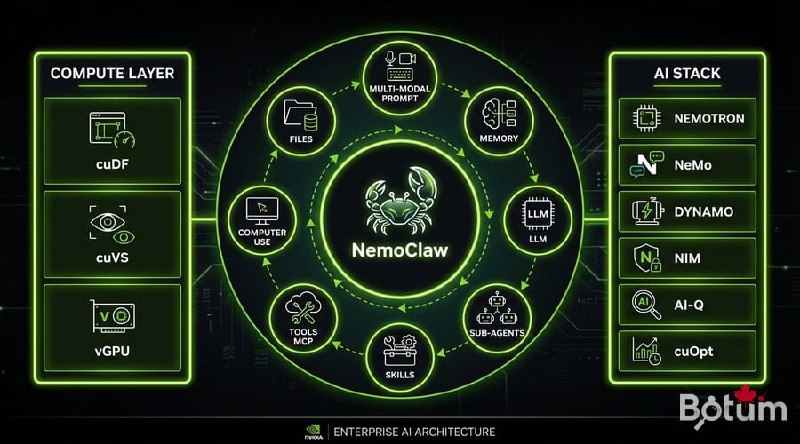
OpenClaw is an AI agent framework designed for real-world, production use. It's not a simple LLM wrapper — it's a complete system with several key components:
Workspace
Each agent has a persistent workspace: files, memory, configuration. The agent can read and write to its workspace between sessions, allowing it to learn and adapt over time.
Skills (Modular Capabilities)
Skills are reusable modules that extend an agent's capabilities. These can be connectors to external APIs (Gmail, Notion, Slack), specialized CLI tools, or specific business logic. Skills are defined via SKILL.md files and can be shared between agents or published on ClawHub.
Autonomous Agents
OpenClaw enables deploying agents that run autonomously, respond to triggers (Telegram messages, emails, webhooks), or operate as coordinated sub-agents. Inter-agent communication is handled natively.
Crons and Automations
Agents can be scheduled via crons, enabling periodic checks: server monitoring, email digests, technology watch, security alerts. All without additional infrastructure.
Contextual Memory
OpenClaw integrates a multi-level memory system: HOT (active session), WARM (a few days), COLD (archived). The agent can consult its own memory to maintain continuity between sessions — an essential capability for complex workflows.
3. What NemoClaw Adds: The Enterprise Layer
NemoClaw is NVIDIA's answer to a question every large organization asks: how do you deploy AI agents in the enterprise without losing control? The answer is a governance layer built directly on OpenClaw.
Sandboxing and Isolation
Each agent runs in a sandboxed environment, isolated from other agents and sensitive system resources. Network access, files, and APIs are controlled by organization-defined policies.
Least-Privilege by Default
NemoClaw enforces the principle of least privilege: an agent only has access to resources strictly necessary for its mission. If a customer support agent doesn't need access to financial data, it doesn't have it — non-negotiable.
Privacy Router
NemoClaw's Privacy Router intercepts data in transit between the agent and external LLM models. It can mask, replace, or refuse to transfer sensitive information (PII, HIPAA data, contractual information), enabling organizations to meet their compliance obligations even when using cloud models.
Complete Audit Log
Every agent action — every tool call, every decision, every file access — is recorded in an immutable audit log. For regulated organizations (finance, healthcare, government), this is a non-negotiable requirement.
Integrated Security Partners
NVIDIA has integrated NemoClaw with major enterprise cybersecurity players: CrowdStrike, Palo Alto Networks, and others. These integrations enable real-time anomaly detection and automated incident response for AI agent events.

4. BOTUM Timeline: Early Adopter Before GTC 2026
Here's what few people know: BOTUM didn't discover OpenClaw at GTC 2026. We were already running it in production, structuring our AI infrastructure around its principles.
| Period | BOTUM Milestone |
|---|---|
| Before GTC 2026 | FDbot deployed on OpenClaw — structured workspace, persistent memory, sub-agent network |
| Before GTC 2026 | Custom skill development: himalaya (email), sonoscli (audio), ordercli (orders), blogwatcher (monitoring) |
| Before GTC 2026 | Multi-agent architecture: JARVIS, KNOX, HERMÈS, NEO, LEDGER, CYRANO and others — coordinated via OpenClaw |
| GTC 2026 | NVIDIA announces NemoClaw — built on OpenClaw. BOTUM already in production on the same foundation. |
| Post-GTC 2026 | NemoClaw capabilities integrated into existing BOTUM infrastructure — natural adoption path |
This isn't self-promotion. It's a demonstration that the principles championed by BOTUM — structured agents, persistent memory, modularity, governance — are now validated by NVIDIA on a global scale. We were early. So were our clients.
5. The 17 Agent Toolkit Partners: Use Cases by Sector
At GTC 2026, NVIDIA presented the Agent Toolkit with 17 strategic partners. Here's how these integrations translate concretely across key sectors:
Healthcare and Life Sciences
- Medigon Health: Clinical agents that synthesize patient records and suggest treatment protocols, while maintaining HIPAA compliance via NemoClaw's Privacy Router.
- BioNexus: Drug discovery acceleration via agents that orchestrate molecular simulations on GPU clusters.
Financial Services
- QuantEdge Capital: Market surveillance agents operating 24/7, generating risk reports and triggering alerts — with complete audit logs for regulators.
- Clearstream Analytics: Regulatory compliance automation: agents that read new directives, compare them to internal policies, and generate gap reports.
Manufacturing and Industry
- Siemens Industrial AI: Predictive maintenance agents analyzing IoT sensor data in real time, coordinating maintenance teams, and managing parts inventory.
- Honeywell Process Controls: Production process optimization via agents that adjust operational parameters based on real-time data.
Retail and E-commerce
- RetailIQ Platform: Personalization agents that adapt the shopping experience in real time, manage product recommendations, and optimize prices dynamically.
- LogiFlow Systems: Supply chain coordination via agents that anticipate stockouts, reroute deliveries, and communicate with suppliers.
Energy and Infrastructure
- GridMind Energy: Smart grid optimization via agents that balance supply and demand, integrate renewable sources, and prevent outages.
- Petrolia Digital: Exploration agents that analyze geological data, coordinate field teams, and optimize extraction.
Media and Entertainment
- ContentForge AI: Fully agentic content production pipeline: research, writing, revision, localization, and publication — with human validation at each critical step.
- StreamLogic: Streaming experience personalization via agents that analyze viewing habits and adapt recommendations in real time.
Government and Public Sector
- CivicAI Solutions: Citizen service agents that process requests, access government databases via secured APIs, and generate policy-compliant responses.
- DefenseLogic Systems: Intelligence analysis via agents operating in ultra-secure enclaves, with granular access control and immutable audit trails.
Telecommunications
- NetworkSense Telecom: Autonomous 5G/6G network management via agents that detect anomalies, reroute traffic, and coordinate technical interventions.
- CallIQ Platform: Call center agents that assist human agents in real time, suggest responses, and escalate intelligently.
Information Technology
- DevFlow AI: DevOps agents that monitor CI/CD pipelines, detect regressions, coordinate deployments, and automatically generate post-mortems.

6. How to Adopt NemoClaw in the Enterprise
Adopting NemoClaw doesn't happen overnight. Here's a pragmatic roadmap for organizations ready to move seriously:
Step 1: AI Maturity Assessment (Weeks 1-2)
Before deploying agents, assess your current situation: what processes are already automated? What data is available? How mature is your IT team on AI? This assessment guides the choice of priority use cases.
Step 2: Define Governance Policies (Weeks 2-4)
With NemoClaw, governance is configured before deployment. Define: which agents have access to which data, what are the alert triggers, how audit logs are retained, and who can access them.
Step 3: Proof of Concept on a Low-Risk Use Case (Months 1-2)
Start with an internal, non-critical use case: report automation, tier-1 IT support, competitive intelligence. This allows your team to get familiar with the tools without major operational risk.
Step 4: Integration with Your Existing Security Stack (Months 2-3)
NemoClaw integrates with CrowdStrike, Palo Alto Networks, and other enterprise security solutions. Configure these integrations so your SOC teams have complete visibility into agent activity.
Step 5: Progressive Expansion to Critical Use Cases (Months 3-6)
Once confidence is established, extend usage to critical business processes. By this stage, governance policies are refined, the team is trained, and security integrations are in place.
Step 6: Training and Agentic Culture (Ongoing)
The biggest adoption barrier isn't technical — it's cultural. Invest in training your teams to work with AI agents as they would with specialized colleagues.
7. What This Changes for a Solutions Architect
If you're a solutions architect, NemoClaw + OpenClaw fundamentally changes your toolkit:
AI Agents Become First-Class Architecture Components
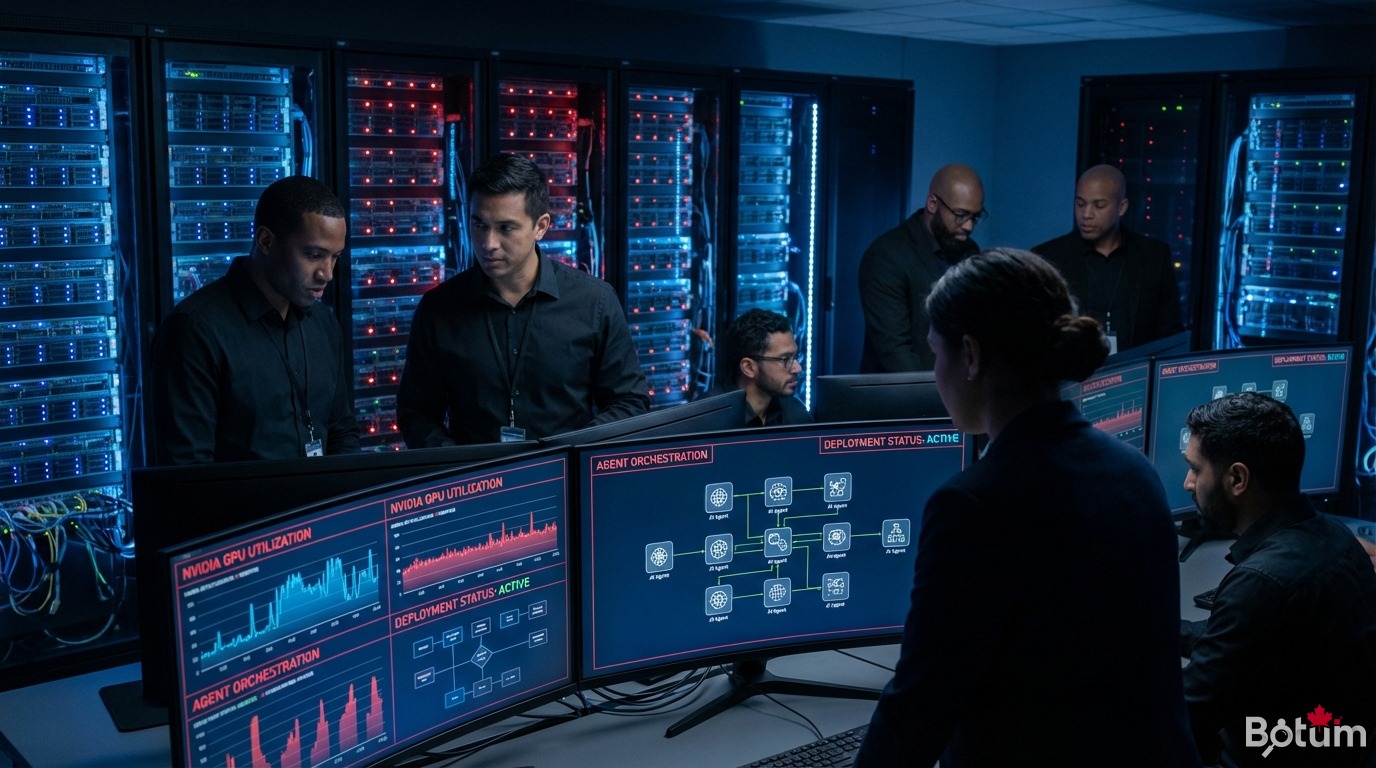
With OpenClaw + NemoClaw, agents become full architectural components: they have their own interfaces, dependencies, lifecycle, and monitoring.
Governance Is No Longer Optional
Every enterprise AI agent architecture must now integrate governance from the design phase. NemoClaw provides the framework, but it's the architect's job to define policies appropriate to the organization's context.
Skills Are the New Microservices
OpenClaw skills play the same role as microservices in distributed architectures: encapsulation, reusability, deployment independence. Except instead of being called via HTTP, they're invoked by agents based on task context.
Contextual Memory Changes Workflow Design
Agents with persistent memory enable workflows that span days, weeks, or months — possibilities that traditional architectures couldn't support: agents that track complex cases over time, learn from past errors, and adapt behavior to individual user profiles.
The Architect's Role Evolves
Tomorrow's solutions architect doesn't just design systems — they orchestrate agent teams. This requires new skills: defining agent responsibilities, designing inter-agent communication protocols, and managing agentic technical debt.
Conclusion
NemoClaw and OpenClaw represent the formalization of enterprise agentic architecture — a framework that BOTUM was already practicing, and that NVIDIA has now elevated to the status of industry standard.
For organizations that haven't started yet: the time is now. For those that started with home-grown approaches: it's time to structure. For those already using OpenClaw like BOTUM: you have a head start. Use it.
BOTUM supports organizations through every step of this transition. Contact us to discuss your specific context.
📥 COMPLETE GUIDE — GTC 2026 · Post B2
⬇ Download the guide (PDF)🚀 Go Further with BOTUM
This guide covers the fundamentals. In production, every AI agent deployment has its specifics. BOTUM teams help organizations evaluate and implement their agentic stack. Let's talk.
Discuss your project →