OpenClaw: From AI Assistant to Agent Network — A Field Report
BOTUM has been running OpenClaw in production for several months. A field report on moving from a single AI agent to a network of 15 specialized agents — and why self-hosted is becoming essential again in 2026.
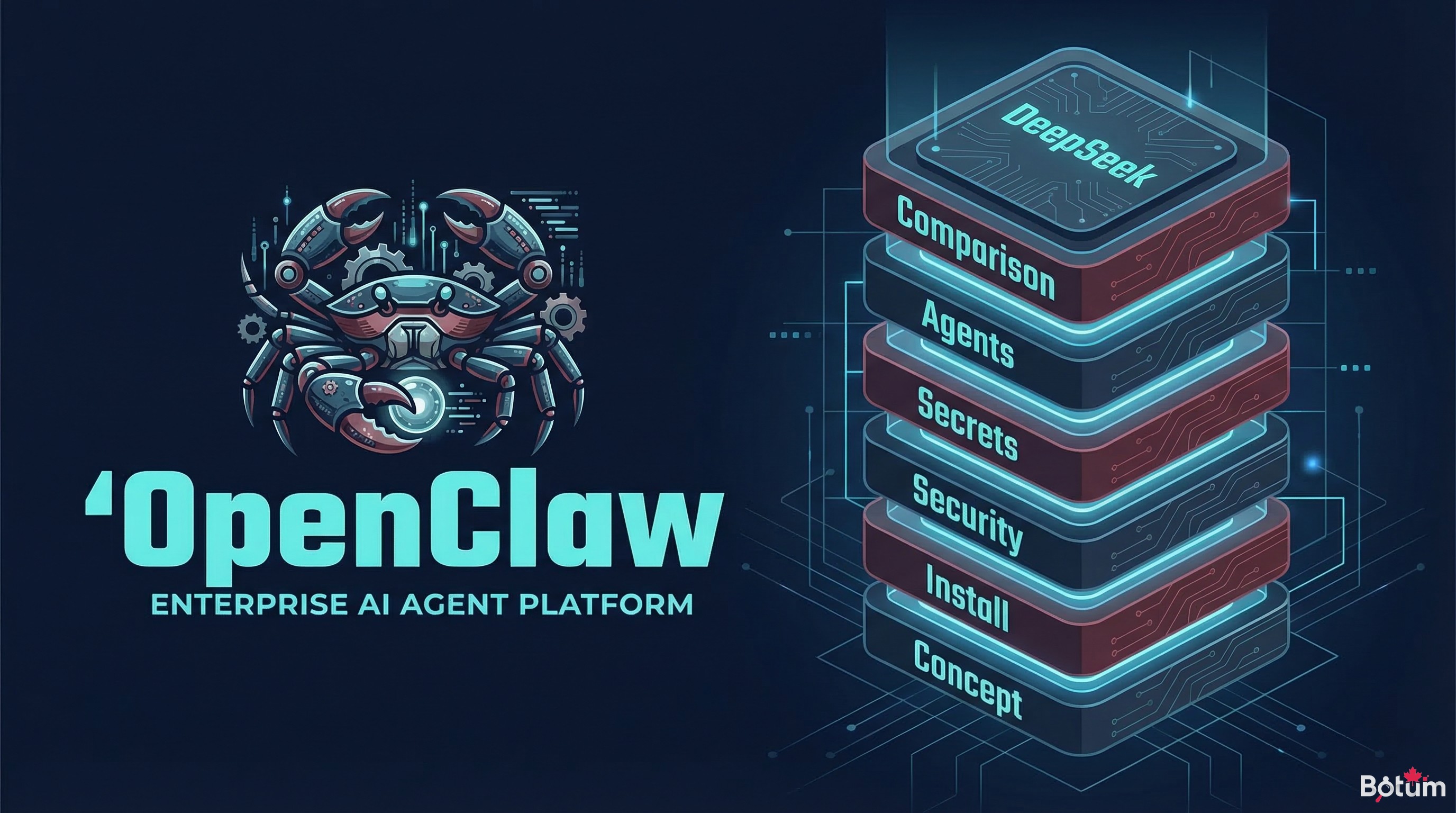
OpenClaw is not ChatGPT. It's not a chatbot you query at the console. It's something else entirely — and that difference is worth unpacking.
Download this guide as a PDF to read offline.
⬇ Download the guide (PDF)For the past several months, BOTUM has been running OpenClaw in production to automate its internal operations. This post opens a 7-part series on that field experience: how we went from a single agent to a network of specialized agents, what it concretely changes, and why self-hosted is becoming relevant again in 2026.
1. What Everyone Thinks About OpenClaw — And Why They're Wrong
The first reaction when you present OpenClaw to a CTO: Ah, like ChatGPT but local? No. Not really.
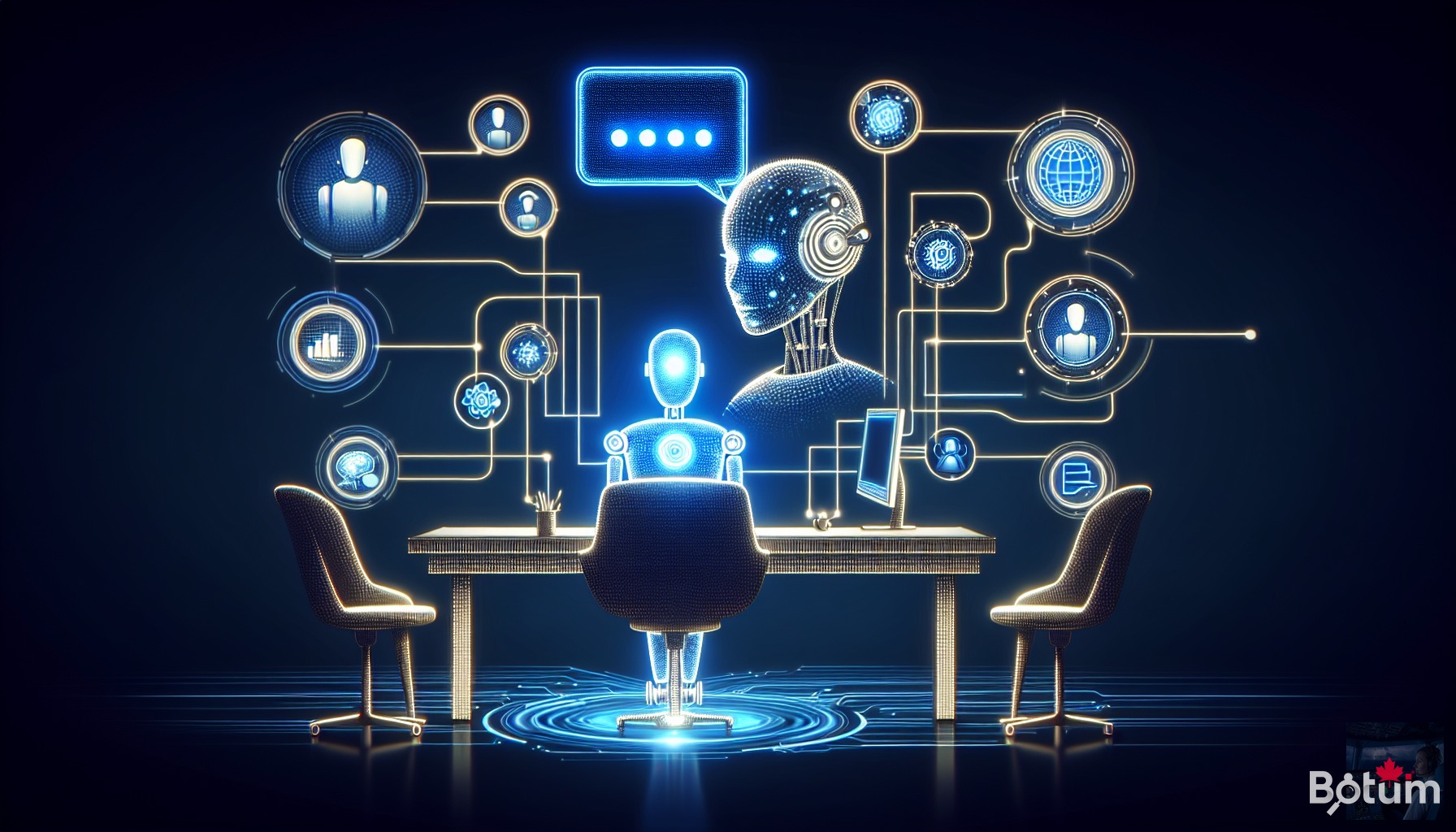
ChatGPT (and its equivalents) are conversational interfaces. You ask a question, you get an answer. You copy-paste. You go back to your workflow. The model has no persistent memory, no access to your files, no autonomous action capability inside your environment.
OpenClaw works differently. The agent has a local workspace — a directory on your machine or server that is its persistent working space. It can read and write files, execute shell commands, interact with APIs, control a browser. It receives instructions via a messaging interface and acts within your infrastructure.
The distinction is fundamental: you don't consult OpenClaw, you delegate tasks to it.
2. The Concept in 5 Minutes
OpenClaw is a self-hosted AI agent runtime. Here's what that means in practice:
- Self-hosted: runs on your infrastructure (VM, server, laptop). Your data doesn't leave your network, except the prompts sent to your chosen LLM.
- Multi-LLM: compatible with Anthropic Claude, OpenAI GPT-4, Google Gemini, and local models via Ollama. You choose — and switch without refactoring.
- Persistent workspace: a versioned Git directory. The agent reads its instructions there, writes its outputs, maintains its memory between sessions.
- Skills: specialized modules (email, calendar, browser, Docker, GitHub...) that you activate à la carte. Each skill gives the agent new capabilities.
- Messaging interface: you interact with the agent through your usual messaging app — no need to open a console or dedicated web interface.
The mental model: think of a very capable junior developer who has access to your terminal, your files, your APIs — and who waits for your instructions in your messaging app. Except they don't sleep, don't take vacations, and handle 50 tasks in parallel.
3. Why Self-Hosted in 2026?
The question comes up often: why bother hosting when SaaS exists?
For personal use or quick experiments, SaaS makes sense. But once you're talking about automating real operations — where the agent has access to your client emails, your calendar, your CRM, your servers — self-hosted becomes non-negotiable for several reasons:
Privacy and Data Sovereignty
An agent that reads your client emails, accesses your invoices, consults your server logs — you don't want that data transiting through a third party's infrastructure. With self-hosted OpenClaw, only the prompts (the question plus minimal context) go to the LLM provider. Your data stays with you.
Total Environment Control
You decide which tools the agent can use, which networks it has access to, which scripts it can execute. No feature flags the vendor enables or disables. No behavior changes at the next SaaS update. Your agent behaves exactly as you configured it.
No Vendor Lock-in
OpenClaw is LLM-agnostic. If Anthropic raises its prices, you switch to a local model or another provider. If a new model outperforms others on your use case, you enable it without changing your infrastructure. The runtime stays stable, the model is interchangeable.
Controlled Costs at Scale
A SaaS agent often charges per-use or on a growing monthly subscription. With self-hosted, your main cost is LLM tokens — and you optimize granularly: lightweight models for mechanical tasks, powerful models for complex tasks. At the scale of a 15-agent network, this granularity makes a real difference on your bill.

4. From Single Agent to Agent Network
The real paradigm shift doesn't come from OpenClaw itself — it comes from the moment you go from a generalist agent to a network of specialized agents.
The generalist agent is a Swiss Army knife. Useful, but limited: a single context, one session at a time, instructions that eventually contradict each other as domains accumulate.
The agent network is a team. Each agent has a defined scope, an identity, rules specific to it. They share a common workspace, hand off artifacts (files, reports, states), and operate autonomously in their domain.
Concretely on our BOTUM infrastructure, it looks like this:
- A system agent — monitors infrastructure health, manages Git commits, maintains long-term memory, triggers context compactions.
- An email agent — reads incoming emails, classifies them, generates daily digests, applies business filtering rules.
- A calendar agent — reads and updates the calendar, generates morning briefings, coordinates reminders with other agents.
- A writing agent — drafts blog posts, professional emails, LinkedIn posts — in the house tone.
- A billing agent — tracks timesheets, generates invoices, reconciles payments.
These agents don't ignore each other. They communicate through shared files in the workspace, through JSON task queues, through defined triggers. The system agent can ask the email agent to send a report. The calendar agent can notify the writing agent of a publication deadline.
The result: automation that looks more like an organization than a script.
5. What It Changes in Operations
The most visible benefit isn't speed — it's continuity.
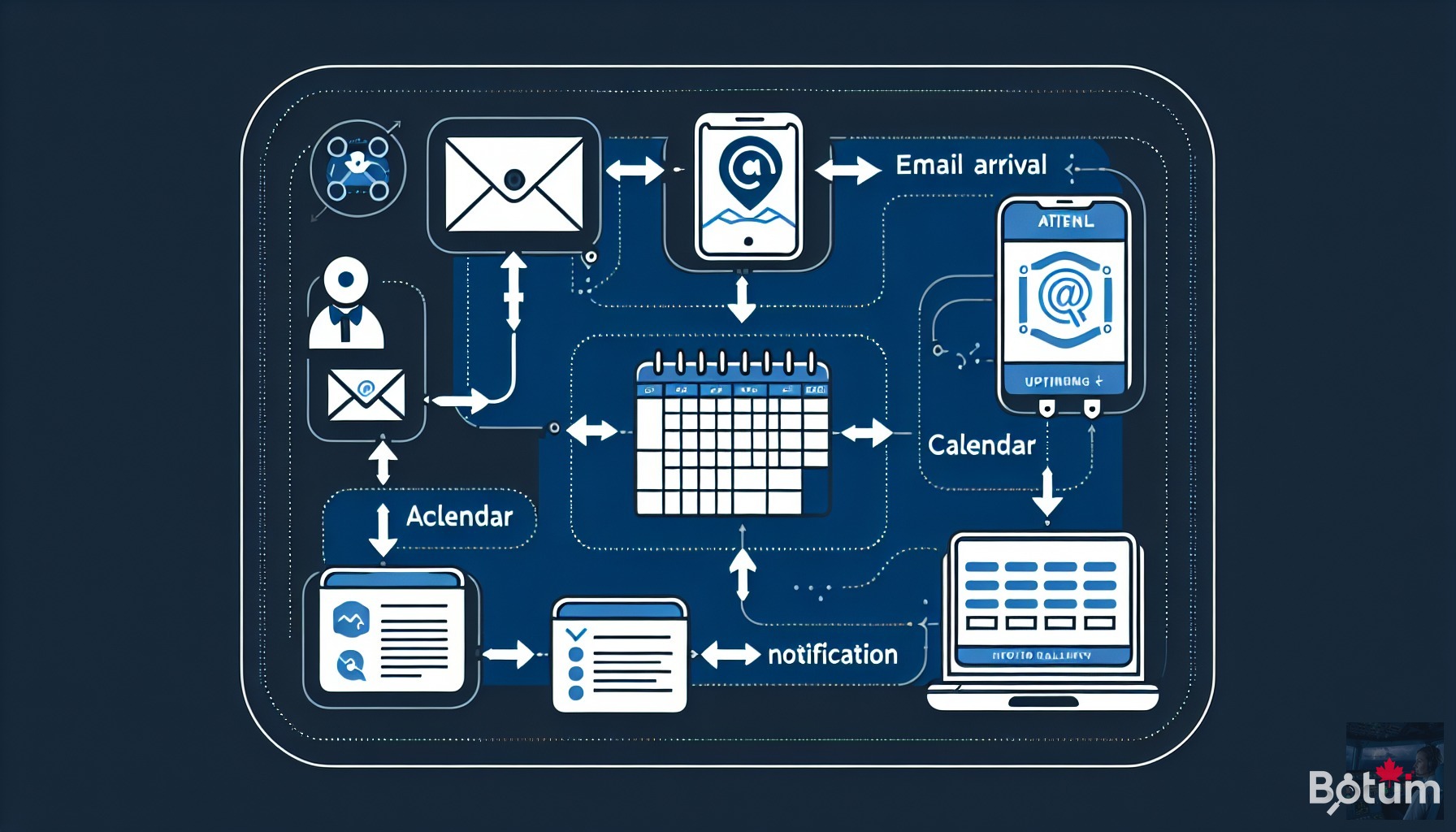
A human has office hours, days off, moments when attention falters. An agent network operates continuously: the daily report arrives at 8:15am even if nobody requested it, the email digest is ready before the workday starts, monitoring runs through the weekend.
The second benefit: native traceability. Every action of every agent is logged in the workspace (versioned Git). You can audit what happened, reproduce a decision, understand why an email was sent or not. No black box.
The third: composability. Once agents are in place, adding new automation usually means configuring a new skill or adding a rule to a configuration file — not coding a new system from scratch.
This isn't an instant transformation. The first few weeks, you calibrate, adjust scopes, discover edge cases. But past that break-in period, the operational gain is real and durable.

6. What This Series Will Cover
This 7-post series documents our OpenClaw deployment at BOTUM, from the most conceptual to the most technical:
- Post 1 (this one) — The concept, self-hosting, and the logic of agent networks
- Post 2 — Installing and configuring OpenClaw (workspace, skills, first agent)
- Post 3 — Deploying an agent network: identities, roles, shared workspace, protocols
- Post 4 — Automating operations: crons, triggers, task queues, escalations
- Post 5 — Advanced integrations: email, calendar, GitHub, Docker, browser
- Post 6 — Security and costs: sandboxing, credential management, token optimization
- Post 7 — Full field report: metrics, failures, lessons learned
We're not selling OpenClaw (we have no affiliation). We're documenting what we built, what works, what broke, and what we'd do differently. For architects and CTOs evaluating whether this type of infrastructure is worth investing in — this series is for you.
→ Post 2 coming soon: Installation and first operational agent in under 30 minutes.
🚀 Go Further with BOTUM
This guide covers the essentials. In production, every environment has its own specifics. BOTUM teams accompany organizations through deployment, advanced configuration, and infrastructure hardening. If you have a project, let's talk.
Discuss your project →